Sabtu, 28 April 2012

Descriptive Text

 Definition of Descriptive Text


In a broad sense, Description, as described by Kane (2000: 352), defined as in the sentence below:

    
Description is about the sensory experience-how something looks, sounds, tastes. Mostly it is about visual experience, but also deals with other description Kinds of perception.
So, to conclude from the above explanation Kane, writing meaningful descriptive text that describes the experiences related to the senses, what kind of shape, sound, taste. Most of the descriptive text is about visual experience, but in fact the experience apart from the sense penglihatanpun can be used in descriptive text.
But specifically, descriptive text is, "...... the which is a text says what a person or a thing is like. Its purpose is to describe and reveal a particular person, place, or thing." [Text describing the picture of a person or object. The goal is a portrait or disclose the person, place or thing specified]
Thus, one might say that this text is descriptive text that describes what kind of person or an object described, both its form, its properties, the amount and others. Objectives (purpose) of the descriptive text was clear, namely to explain, or describe the person or an object revealed.

Generic Structure in Descriptive Text


When writing descriptive text, there are some common composition / generic structure (actually not mandatory) in order to be considered correct our writing. The order is:

    
Identification: it contains the identification of / a which will be described.
    
Description: contains an explanation / description of the / someone to mention a few properties.
When we write the descriptive text, we should realize that it is the way we deliver our writing these descriptions. Therefore an understanding of the adjective (the adjective in English) must be under our control.
In addition to adjective, a structure that serves as an English adjective we must also understand that the writing of descriptive text we do not look stiff.


A DESCRIPTIVE TEXT EXAMPLE - MY HOUSE
 

I live in a small house. It has five rooms: there are two bedrooms, a living room, a bathroom, and a kitchen. Indeed it is a small house; but I like living in here for wasting my spare time.

When the door is open, I can see the living room. It is so small with only three chairs and a table, nothing else. I prefer reading a novel in this room.

My bedroom is in the left side of the living room. In this room there is a night table next to the bed, a TV, a radio, and a computer. When being bored of reading, I usually play online games, chat with my friends via Facebook and so on. 

Next to my bedroom is my mother's. I do not know what is inside because I never come in to see it. In the right side of the living room there is the kitchen. In the kitchen I have everything I need when I get hungry. It is very pleasure when my mother cooks, the smell fills my whole house.

I know it is a very small house; but it is the best place I have ever seen. 


A DESCRIPTIVE TEXT EXAMPLE - MY FAMILY

My family has four members: those are I, my sister, and parents of course.

My mother is 47 years old. Her name's Anisa. She's thin-faced and she's got long, blond hair and beautiful green eyes. She is still slim because she always tries to stay in shape. She is very good-looking, always well-dressed and elegant.

My father, Lukman, is 5 years older than my mother. He is 52. In spite of his age he's still black-haired, with several grey hairs. He has bright blue eyes. He is quite tall, but a bit shorter than me. He's very hard-working. Besides that he is working in a travel company. He can even make a dinner when my mother is outside. His cooking and his meals are always very tasty as well as my mothers'.

Finally, my sister Nadina. She is 22. She is also red-haired and green-eyed. She has long wavy hair and freckles. She is definitely shorter than me. She is rather introverted. But she is very sensible, smart and co-operative. Right now she is studying English and also knows Arabic and Mandarin. I want to be so smart as she is.

They all, except me, speak Sundanese very well, because we were living in Bandung for 5 years. My sister have been going to primary school there. Unfortunately I was only 3 when we were leaving to Jakarta, so I can't speak Sundanese. Now we are happily living in Jakarta.


A DESCRIPTIVE TEXT EXAMPLE - MY SPHYNX CAT
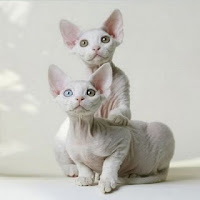
descriptive text examples
Sphynx Cats
My Sphynx cat is the only pet I have. He has a little hair but is not totally hairless as he has a peach fuzz over much of his body. His coat is often a warm chamois. My Sphynx has a normal cat proportion.

I like his tail although my mom say that it is like a rats tail. I love his usual color varieties including, tortoiseshell, chocolate, black, blue, lilac, chocolate etc. He is really an amazing cat. Believe it or not, he is very intelligent cat. He can respond my voice commands.

He is really funny as well as my friends get a joke. I love him so much as I love my mother.

Introductory It

Introductory It

When the subjective is an infinitive phrase
We begin a sentence with it when the real subject is an infinitive phrase. So instead of saying, ‘To accept your advice is difficult’, we say, ‘It is difficult to accept your advice’.
Structure: It + verb + subject complement + infinitive phrase (real subject)
It is easy to learn English. (= To learn English is easy.)
It is easy to find fault with others. (= To find fault with others is easy.)
It is difficult to know his motive. (= To know his motive is difficult.)
It is difficult to find a good job during these troubled times.
It is dangerous to play with fire.
It could be dangerous to drive so fast.
Note that when we wish to emphasize the infinitive phrase, it may be put at the beginning, especially when it is short.
To err is human. (OR It is human to err.)
To become a well known writer was his life-long ambition. (OR It was his lifelong ambition to become a well known writer.)
To invest all your money in shares is foolish. (OR It is foolish to invest all your money in shares.)


When the subject is a gerund phrase
When the real subject is a phrase that includes a gerund, it is used as a provisional subject to begin the sentence. So instead of saying ‘Your trying to fool us is no good’, we say, ‘It is no good your trying to fool us.’
It won’t be any good complaining to the manager. (Complaining to the manager won’t be any good.)
It is silly throwing away this opportunity. (Throwing away this opportunity is silly.)
Will it be any good my talking to him about it? (Will my talking to him about it be any good?)
It is no fun having so many children to look after. (Having so many children to look after is no fun.)
Note that it is possible to change the gerund into an infinitive.
It won’t be any good for me to complain to the manager.
It is silly (for you) to throw away this opportunity.
Will it be any good for me to talk to him about it?
Many of these sentences can also be re-written as exclamatory sentences.
How silly of you to throw away this opportunity!

Passive Voice

Use of Passive

Passive voice is used when the focus is on the action. It is not important or not known, however, who or what is performing the action.
Example: My bike was stolen.
In the example above, the focus is on the fact that my bike was stolen. I do not know, however, who did it.
Sometimes a statement in passive is more polite than active voice, as the following example shows:
Example: A mistake was made.
In this case, I focus on the fact that a mistake was made, but I do not blame anyone (e.g. You have made a mistake.).

Form of Passive

Subject + finite form of to be + Past Participle (3rd column of irregular verbs)
Example: A letter was written.
When rewriting active sentences in passive voice, note the following:
  • the object of the active sentence becomes the subject of the passive sentence
  • the finite form of the verb is changed (to be + past participle)
  • the subject of the active sentence becomes the object of the passive sentence (or is dropped)

Examples of Passive Level 2

Tense Subject Verb Object
Simple Present Active: Ritawritesa letter.
Passive: A letteris writtenby Rita.
Simple Past Active: Ritawrotea letter.
Passive: A letterwas writtenby Rita.
Present Perfect Active: Ritahas writtena letter.
Passive: A letterhas been writtenby Rita.
Future I Active: Ritawill writea letter.
Passive: A letterwill be writtenby Rita.
Hilfsverben Active: Ritacan writea letter.
Passive: A lettercan be writtenby Rita.

Examples of Passive Level 4

Tense Subject Verb Object
Present Progressive Active: Ritais writinga letter.
Passive: A letteris being writtenby Rita.
Past Progressive Active: Ritawas writinga letter.
Passive: A letterwas being writtenby Rita.
Past Perfect Active: Ritahad writtena letter.
Passive: A letterhad been writtenby Rita.
Future II Active: Ritawill have writtena letter.
Passive: A letterwill have been writtenby Rita.
Conditional I Active: Ritawould writea letter.
Passive: A letterwould be writtenby Rita.
Conditional II Active: Ritawould have writtena letter.
Passive: A letterwould have been writtenby Rita.

Passive Sentences with Two Objects Level 3

Rewriting an active sentence with two objects in passive voice means that one of the two objects becomes the subject, the other one remains an object. Which object to transform into a subject depends on what you want to put the focus on.
  Subject Verb Object 1 Object 2
Active: Ritawrotea letterto me.
Passive: A letterwas writtento meby Rita.
Passive: Iwas writtena letterby Rita.
. As you can see in the examples, adding by Rita does not sound very elegant. That’s why it is usually dropped.

Personal and Impersonal Passive

Personal Passive simply means that the object of the active sentence becomes the subject of the passive sentence. So every verb that needs an object (transitive verb) can form a personal passive.
Example: They build houses. – Houses are built.
Verbs without an object (intransitive verb) normally cannot form a personal passive sentence (as there is no object that can become the subject of the passive sentence). If you want to use an intransitive verb in passive voice, you need an impersonal construction – therefore this passive is called Impersonal Passive.
Example: he says – it is said
Impersonal Passive is not as common in English as in some other languages (e.g. German, Latin). In English, Impersonal Passive is only possible with verbs of perception (e. g. say, think, know).
Example: They say that women live longer than men. – It is said that women live longer than men.
Although Impersonal Passive is possible here, Personal Passive is more common.
Example: They say that women live longer than men. – Women are said to live longer than men.
The subject of the subordinate clause (women) goes to the beginning of the sentence; the verb of perception is put into passive voice. The rest of the sentence is added using an infinitive construction with 'to' (certain auxiliary verbs and that are dropped).
Sometimes the term Personal Passive is used in English lessons if the indirect object of an active sentence is to become the subject of the passive sentence.

News Item

News Item Text - Explanations and Examples


.News items are one type of "text" that can lead us into a reliable journalist. By studying this text, we at least have been training to be able to write like a professional news writers. Therefore, do not be lazy if the teacher told my friend to do the task of creating a text message in English, okay? Well maybe one day my friend can be a high profile journalist :)
However, if my friend has not fully understand the text of this news item, it goes buddy grieve; hopefully by reading this article my friend could be smarter than the father / teacher friend in writing a news item text :)

    
Definition News Item

    
Generic Structure of News Item

    
What Makes a News Item

    
Example News Item

Definition News Item
News item is a text about the which informs readers events of the day. Considered The events are newsworthy or important. (News item is a text that gives information about the incident / event daily. Daily event is considered to be news worthy or [could say] important)
That is, if there is a significant event that should be known by many people, then it deserves to be a news event. Well, it was called a text message with the news item. However, if there is an inappropriate event is known by many people, the event certainly did not deserve to be news.
Generic Structure of News Item
There are three common arrangement in writing a news item, here is a generic structure of the News item:

    
Main Events: The main event which deserves to be news.
    
Elaboration: A description of the background of the event; the people involved in the incident; where events occurred, and others ..
    
Resource of Information [Source]: The source of news; comments of the witnesses; opinions of experts, and others.
For the first point, the main event should really newsworthy. Do not let there be a scene as an important ga news entry, will be the readers / viewers do not like the news story. For example: Mr. momod Go to Market to Buy Rice .. whoa who tuh pack momod .. :)
What Makes a News Item
There are so many common traits news item text; most prominent feature of the language is concise and straightforward. A few more of them:

    
Frequent use of action verbs
    
Dominant use of saying verbs
    
Many use the adverb of time, adverb of place, adverb of manner.
Note:

    
Action verbs are verbs that show the activity. (Read more clearly: Dynamic Verbs)
    
Saying verbs such as "reported, said, quoted, saying, preach, quoting".
    
Read adverb: adverb type

Example News ItemPamekasan student wins math contest in Romania
Alyssa Diva Mustika, a student from Pamekasan Junior High School, East Java, won the gold medal at the International Mathematics Contest held in Romania Between March 22 to 29, Antara news agency reported.
news itemSpeaking to Journalists, Diva said she was glad That she had been Able to win the competition, the which she said had been very tight. "Thank God I won. I will study harder, "she said.
Indonesia sent 10 students to the competition in Romania. Diva is not the first Pamekasan student to win an international science competition. Oktavian Latif, a student from SMA Negeri 1 Pamekasan won gold at the International Physics Olympiad in 2006. Another student, Shohibul Maromi, won the same award in 2010.
"I thank Diva for giving a good name to Indonesia and Pamekasan on the international stage," Pamekasan Regent Kholilurrahman said as quoted by Antara.
Example News Item analysis above:
First paragraph: Main EventsSecond & Third paragraph: ElaborationFourth paragraph: Sources.

Narrative Text

Communicative purpose of Narrative Text

Communicative goals Narrative Text as described above is to entertain the listener or reader about a past story or stories related to the experience of real, imaginary or complex events that led to a crisis, which eventually find a solution.

Narrative Text Generic Structure

Each type of English text (genre) has the structure of the text on their own. Structure of Narrative Text consists of three parts:

A. Orientation
In the Orientation section contains the introduction or the introduction of the characters in the story as well as time and place of occurrence.

2. Complication
Complication section contains an overview of the emergence of crises or problems experienced by the characters in the story that must be solved.

3. Resolution
Resolution on baigan contains characters from a story about how the solve the problems that exist in the Complication.


EXAMPLE OF NARRATIVE TEXT : GOLDEN EGGS

Long time ago a remote village, in central China was inhabited mainly with farmers and hunters. One day, a poor farmer lost his entire livestock to flood. He prayed hard to God for help or his family would die of starvation.
Few days later, an old man with long grey beard, passed by his house took pity on him. He gave him a goose and said “ I don’t have any expensive thing to give you and hope this goose will help you to ease your hardship.”
A week later to almost surprise the farmer found and egg in his yard. This was no ordinary egg. It was a golden egg. He was suddenly overcome with joy.
Thereafter, his livelihood had rapidly improved but the farmer had forgotten his earlier hardship. He became lazy, arrogant and spendthrift.
Strangely, the goose only laid one golden egg every six months. The greedy farmer lost his patient and slaughtered his goose thinking there were plenty of golden eggs inside its stomach.
Though he very much regretted for his foolishness, it’s already too late.

Invitation


Invitation is a way to invite someone or more to go to a place or to do something.
There are two types of invitation:
1. Formal Invitation
Formal invitation is usually originate from Institutes, Companies and a kind of it. Normally formal invitation is written invitation.


2. Informal Invitation
Informal invitation is personal invitation given to a friend, family, etc. Informal invitation can be written invitation and verbal invitation.
 

Example of Informal Invitation


How to write an invitation
Step 1
before you write an invitation; decide on the tone, voice and level of formality, based on the event itself. This will dictate whether you hand-write the cards or have them printed, and whether you choose A preprinted or personalized invitation.
Step 2
Choose the type of invite you want, and order or buy a few more than you think you'll need. This will permit you to add some guests to your list at the last minute, if necessary. For small parties, you may want to hand-write the invitations on stationery or blank cards. For large gatherings, consider ordering printed invitations.
Step 3
Determine the wording of your invite based on the level of formality. For example, a formal invitation might say, 'Dr. and Mrs. Stanley request the pleasure of your company,' whereas a more casual note might say, 'Please join us.'
Step 4
Include the names of the host and/or hostess, as well as the place (with street address), time, date and purpose of the occasion, even if it's a simple get-together.
Step 5
Make sure to add RSVP information at the bottom of the invite if you need to know who will be attending; for example, 'RSVP' followed by your telephone number.
R.S.V.P. stands for a French phrase, "répondez, s'il vous plaît," which means "please reply.“The person sending the invitation would like you to tell him or her whether you accept or decline the invitation. That is, will you be coming to the event or not?
Step 6
Include a respond-by date on a formal invitation so you can get an accurate head count in time to adjust the amount of food, number of place settings and room size. For a wedding, charity function or other formal event, consider including a response card and a stamped, self-addressed envelope inside the envelope containing your invite.
Step 7
Mail invitations three weeks before most events, four weeks before a formal affair and three months before a wedding, to allow for airline reservations. For events held during the December holidays, send invitations around Thanksgiving.
Example of invitation:
1. Wedding invitation
2. Birthday invitation
3. Baby shower
4. Dinner invitation

Suprise And Disbelief

Definition
Surprises and disbelief is an expression that we show/say when know/hear/see something that rather difficult to believe.

Expressing Surprise:
  • Wow! What a surprise!
  • That's a surprise!
  • That's very surprising!
  • Really?
  • What?
  • Are you serious? You must be joking!
  • You're kidding!
  • Fancy that!
  • I must say it surprise me
  • I find it hard to believe
Responding:
  • Yeah!
  • It is
  • Yup!
  • Sure
  • It's true
  • I'm serious
  • No, I'm not
  • Does it?
  • It is, isn't it?
When you got surprising fact, you can say:
  • Do you know what?
  • Believe it or not?
  • You may not believe it, but.....
  • Can you believe this?
Example of Surprise:
Rensi: Whose car is that?
Yeyen: It's Tami
Rensi: Are you kidding me?
Yeyen: No, I'm not. I saw her riding that car this morning
Rensi: What's surprise!

Expressing Disbelief:
  • I don't believe it
  • It can't be true
  • I can't think of it
  • I don't trust you
Example of Disbelief:
Tetty: I heard the news about tiren. What is tiren, Diana?
Diana: "Tiren" stand for "mati kemarin". It is chicken meat taken from a dead chicken. In other word, it is a corpse.
Tetty: I can't believe this! How can people sell such chicken meat?
Diana: Some say, they want to get more bucks of money.
Tetty: I don't think they should do it. They cheat the buyers.
Diana: More than that. They harm the buyers.
Tetty: That's right!